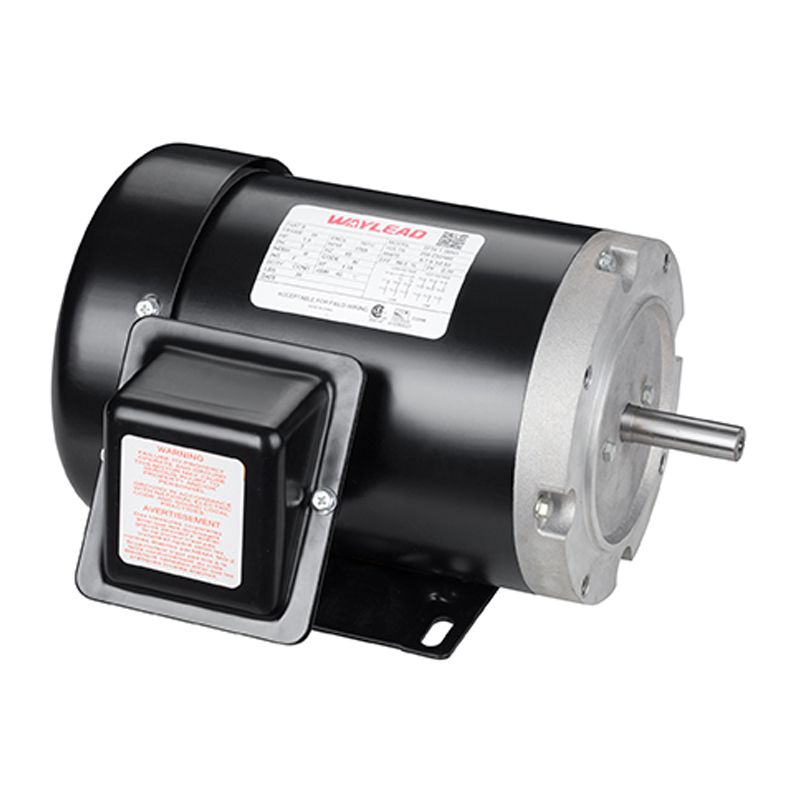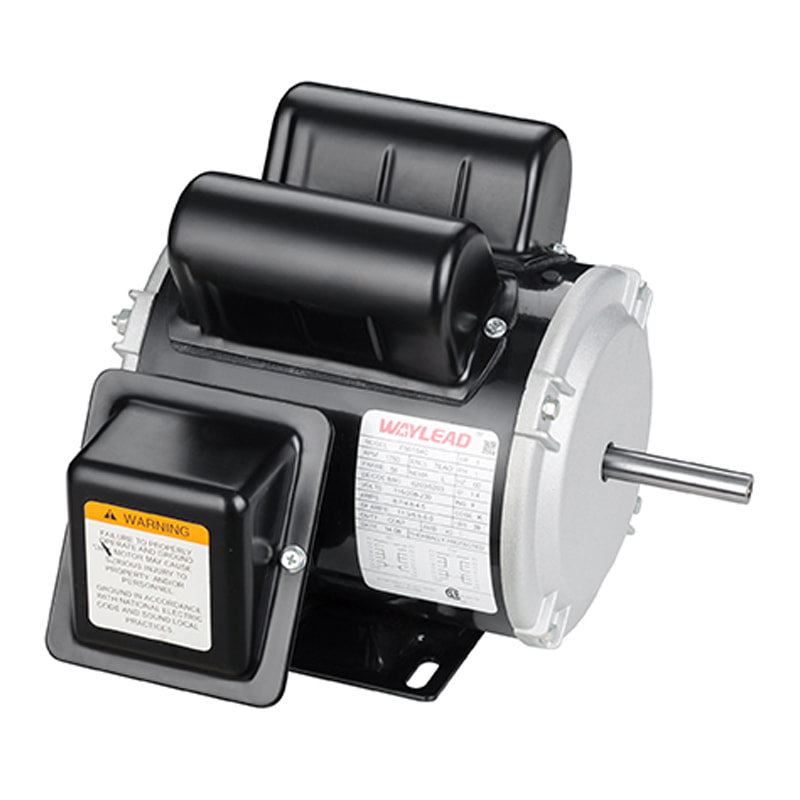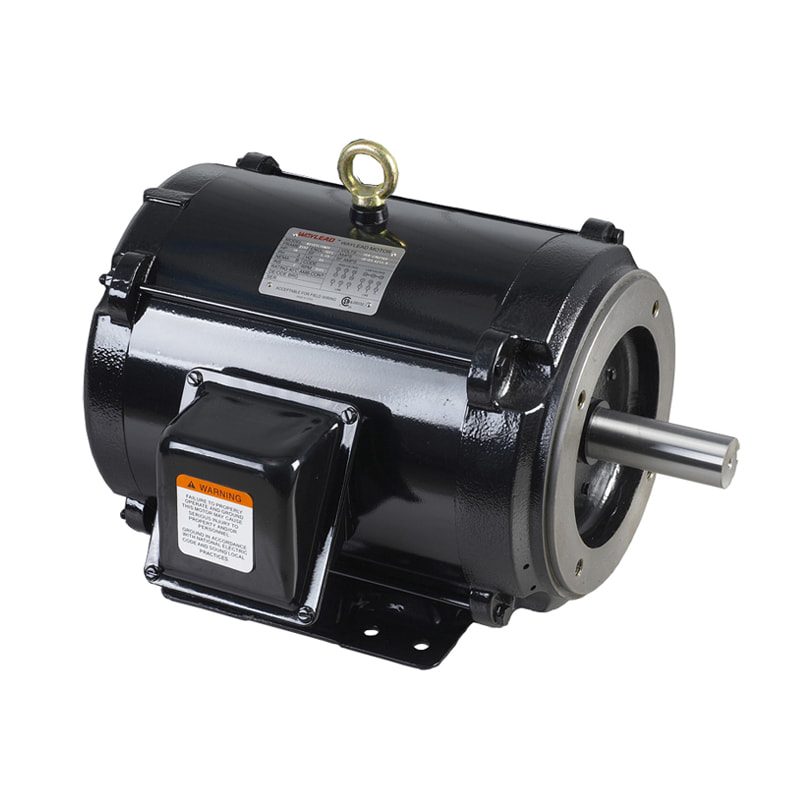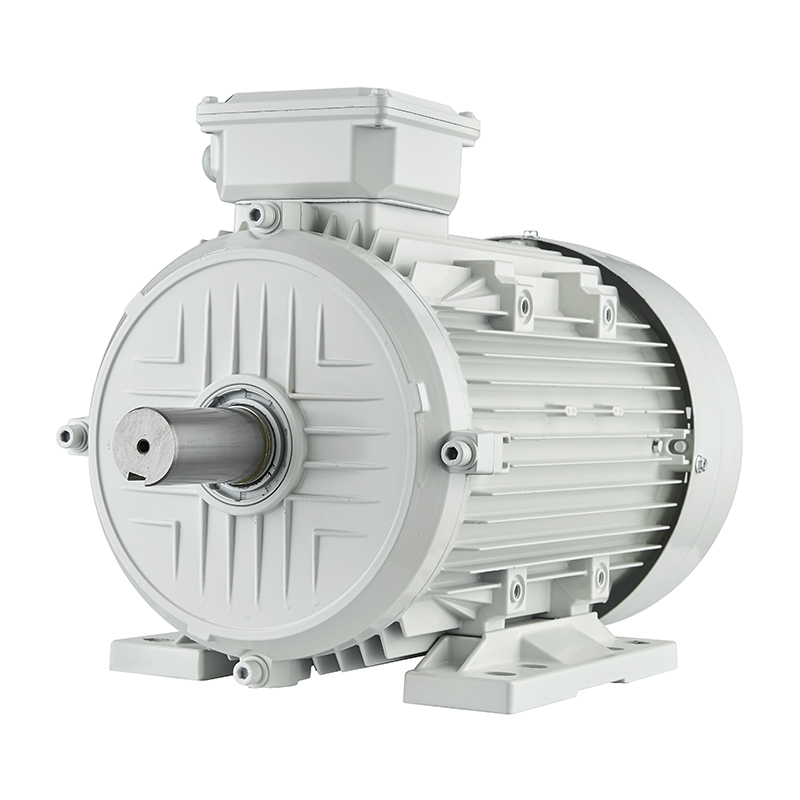
An electric motor works by converting electrical energy into mechanical rotational energy through the interaction of magnetic fields — specifically, by applying the Lorentz force, which states that a current-carrying conductor placed inside a magnetic field experiences a force perpendicular to both the current direction and the field. This force, when applied to a loop of wire (the rotor), produces continuous rotation. The physics of a motor is rooted in three laws: Faraday's Law of Electromagnetic Induction, Ampere's Law, and the Lorentz Force Law — together governing every motor from a simple toy to a 20,000 kW industrial drive.
Electric motors are the single largest consumer of electricity in the world. According to the International Energy Agency (IEA, 2023), motor-driven systems account for approximately 45% of global electricity consumption — more than lighting, heating, and computing combined. Industrial motors alone consume roughly 70% of all electricity used in manufacturing. Yet most people who rely on motors every day — in cars, appliances, computers, and factories — have only a vague understanding of the physics that makes them work.
This article explains the physics of how a motor works from first principles, covering the electromagnetic laws that govern rotation, the difference between AC and DC motor physics, how efficiency is calculated, and how different motor types compare in real-world performance. Whether you are a physics student, an engineering professional, or simply curious about the machines that power modern life, this guide gives you a complete, accurate, and practically grounded understanding.
The Core Physics: What Makes a Motor Spin?
At its most fundamental level, a motor works because of a single physical phenomenon: a magnetic force acts on moving electric charges. This force — described by the Lorentz Force Law — is the engine behind every electric motor ever built.
The Lorentz Force Law
The Lorentz Force Law states that a particle with charge q moving with velocity v in a magnetic field B experiences a force F given by:
In practical motor terms, the moving charges are electrons flowing as current I through a wire of length L inside a magnetic field B. The resulting force on that wire is:
Where θ is the angle between the current direction and the magnetic field. The force is maximum (F = BIL) when the current and field are perpendicular (θ = 90°), and zero when they are parallel. This is why motor designers orient their conductors and fields at 90 degrees to each other at the point of maximum torque.
The Fleming Left-Hand Rule
The direction of the force on a current-carrying conductor in a magnetic field is determined by the Fleming Left-Hand Rule: point the index finger in the direction of the magnetic field (north to south), the middle finger in the direction of conventional current flow, and the thumb indicates the direction of the resulting force (motion). This rule is the physical basis of every DC and AC motor — the thumb direction tells you which way the rotor will push.
From Force to Torque: Creating Continuous Rotation
A single straight conductor in a magnetic field produces a one-directional push — not rotation. To create continuous rotation, the conductor is formed into a rectangular loop (the armature coil) placed between two magnetic poles. When current flows:
- One side of the loop is pushed upward (Fleming's rule with current flowing in one direction).
- The opposite side is pushed downward (current flows in the opposite direction in that side).
- These two opposing forces create a couple — a rotational torque — that spins the loop about its central axis.
The torque τ produced by a motor is given by:
Where N is the number of turns in the coil, B is the magnetic flux density (Tesla), I is the current (Amperes), A is the loop area (m²), and θ is the angle between the coil plane and the magnetic field. Maximum torque occurs at θ = 90°. The challenge motor engineers solve is making this torque continuous rather than oscillating — which is where the commutator (DC motors) or rotating magnetic field (AC motors) becomes essential.
How a DC Motor Works: Physics and Components
A DC motor works by using a mechanical commutator to continuously reverse the direction of current in the rotor coil as it rotates — ensuring that the electromagnetic torque always acts in the same rotational direction, producing smooth, continuous spinning motion.
Key Components of a DC Motor
- Stator (field magnet): The stationary outer frame containing permanent magnets or field windings that create the static magnetic field. Magnetic flux density B in the air gap typically ranges from 0.6 to 1.2 Tesla in modern DC motors.
- Rotor (armature): The rotating inner assembly carrying the current-bearing coils. Multiple coils wound around a laminated iron core maximize the active conductor length in the magnetic field and reduce magnetic losses.
- Commutator: A segmented copper ring attached to the rotor shaft. As the rotor turns, the commutator segments pass under stationary carbon brushes, automatically reversing the current direction in each coil at the moment it would otherwise produce opposing torque. This is the mechanical solution to the "direction reversal problem."
- Brushes: Carbon or graphite contacts that press against the commutator, maintaining electrical connection between the stationary external circuit and the rotating armature. Brush friction is a primary source of energy loss and mechanical wear in DC motors.
- Back-EMF (counter-electromotive force): As the rotor spins, its conductors cut through the magnetic field and generate a voltage opposing the supply voltage — exactly as Faraday's Law predicts. This back-EMF (ε = NBAω, where ω is angular velocity) limits current and acts as the motor's self-regulating mechanism. At full speed with no load, back-EMF approaches the supply voltage and current falls to nearly zero.
Back-EMF and Speed Regulation
The relationship between supply voltage V, back-EMF ε, armature resistance Ra, and current I in a DC motor is expressed as: V = ε + I·Ra. At startup, ε = 0 (rotor is stationary), so startup current = V/Ra — which is why DC motors draw very high inrush current at startup and require starting resistors or electronic soft-starters in high-power applications. As speed increases, ε increases, reducing I and therefore reducing torque — creating the characteristic speed-torque curve of the DC motor.
How an AC Induction Motor Works: Physics Without Brushes
An AC induction motor works through a fundamentally different mechanism than a DC motor — it uses a rotating magnetic field created by alternating currents in the stator to induce currents in the rotor by electromagnetic induction, producing torque without any physical electrical connection to the rotor. This is why AC induction motors are also called "brushless" — they have no commutator or brushes.
The Rotating Magnetic Field: Nikola Tesla's Key Insight
When three-phase alternating current flows through three sets of stator windings arranged 120 degrees apart, the combined magnetic field of the three windings rotates at a speed called the synchronous speed:
Where Ns is synchronous speed in RPM, f is supply frequency in Hz, and P is the number of magnetic poles. For a standard 4-pole motor on a 60 Hz supply: Ns = (120 × 60) / 4 = 1,800 RPM. For a 2-pole motor on 60 Hz: Ns = 3,600 RPM. This rotating field sweeps past the stationary rotor conductors, inducing voltages in them by Faraday's Law — and the resulting induced currents in the rotor interact with the rotating field to produce torque.
Slip: The Essential Physics of Induction
The rotor of an induction motor never reaches synchronous speed — it always runs slightly slower. This speed difference, called slip, is physically necessary because if the rotor were running at exactly synchronous speed, there would be no relative motion between the rotor conductors and the rotating field, no induced current, no force, and no torque. Slip s is expressed as:
Where Nr is the actual rotor speed. At full load, typical induction motor slip is 2–5%. A 4-pole, 60 Hz motor with 3% slip runs at 1,800 × (1 - 0.03) = 1,746 RPM — which is why motor nameplates show 1,750 RPM rather than the theoretical 1,800 RPM synchronous speed. Slip increases as load increases, automatically increasing the induced current and therefore the torque to match the load demand — a natural self-regulating behavior governed entirely by Faraday's Law.
DC vs. AC vs. Brushless DC vs. Synchronous: Motor Physics Compared
Different motor types implement the same underlying electromagnetic physics through different engineering architectures — each with distinct performance, efficiency, and application trade-offs that emerge directly from their physical operating principles.
| Parameter | DC Brushed Motor | AC Induction Motor | Brushless DC (BLDC) | Synchronous AC Motor |
| Commutation Method | Mechanical (brushes) | Electromagnetic induction | Electronic (inverter) | AC field synchronization |
| Typical Efficiency | 70–85% | 85–95% | 90–97% | 92–97% |
| Speed Control | Simple (voltage/current) | Requires VFD for variable speed | Electronic controller required | Requires VFD or pole changing |
| Torque at Low Speed | Excellent | Good (with VFD) | Excellent | Good |
| Maintenance Requirement | High (brush replacement) | Very low | Very low | Low |
| Power Density | Medium | Medium–High | Very High | High |
| Cost | Low | Low–Medium | Medium–High | Medium–High |
| Key Physics Principle | Lorentz force + mechanical commutation | Faraday induction + slip | Lorentz force + electronic commutation | Magnetic field synchronization |
| Typical Applications | Power tools, hobby robots, small appliances | Industrial pumps, fans, conveyors | EVs, drones, hard drives, robotics | CNC machines, elevators, generators |
Table 1: Comparative physics, performance, and application data for the four primary electric motor types. Efficiency figures sourced from IEEE Standard 112 and IEC 60034-30-1 motor efficiency classifications.
The Physics of Motor Efficiency: Where Does the Energy Go?
Motor efficiency is defined as the ratio of mechanical output power to electrical input power — and understanding the physics of motor losses reveals exactly where energy is wasted and how engineers reduce those losses in high-performance designs.
The Five Loss Mechanisms in Electric Motors
- Copper losses (I²R losses): Heat generated by current flowing through the resistance of the motor windings. Copper losses scale with the square of current — doubling the current quadruples copper losses. These are the dominant loss at high load. Reducing winding resistance (heavier gauge wire, shorter winding paths) directly cuts copper losses.
- Iron (core) losses: Energy lost in the magnetic core material through two mechanisms — hysteresis loss (energy consumed magnetizing and demagnetizing the iron each cycle, proportional to frequency) and eddy current loss (circulating currents induced in the iron by the changing magnetic field, proportional to frequency squared). Using thin, silicon-steel laminations reduces eddy current paths and cuts core losses by 60–80% compared to solid iron cores.
- Mechanical losses (friction and windage): Bearing friction and aerodynamic drag from the spinning rotor and cooling fan. These are relatively constant with speed and represent 1–3% of rated power in most designs.
- Stray load losses: A catch-all category for losses caused by non-uniform current distribution, harmonic magnetic fields, and leakage flux. Typically 0.5–1.5% of rated power — reduced in premium designs through careful slot geometry and winding distribution.
- Brush and commutator losses (DC motors only): Voltage drop across the brush-commutator interface (typically 1–3 V per brush) and resistive heating. In a 24 V DC motor, this can represent 8–25% of input voltage — a significant efficiency penalty that brushless designs eliminate entirely.
| Loss Type | Typical Share of Total Losses | Scales With | Primary Mitigation |
| Copper (I²R) | 35–50% | Current squared (I²) | Heavier gauge wire; better slot fill |
| Iron (core) | 20–35% | Frequency; flux density | Silicon-steel laminations; grain orientation |
| Mechanical | 10–20% | Speed | Precision bearings; aerodynamic rotor design |
| Stray Load | 5–15% | Load current; harmonics | Optimized slot geometry; winding distribution |
| Brush/Commutator | 5–25% (DC only) | Current; speed | Brushless design; low-resistance brush materials |
Table 2: Electric motor loss types, their share of total losses, what they scale with, and the primary engineering mitigations. Source: IEEE Standard 112-2017 and IEC 60034-2-1.
How Brushless DC Motors Work: The Physics of Electronic Commutation
A brushless DC (BLDC) motor achieves the same Lorentz-force-driven rotation as a brushed DC motor but replaces the mechanical commutator with an electronic controller that switches current to different stator windings in sequence — eliminating brush wear and enabling far higher efficiency and power density.
In a BLDC motor, the roles of rotor and stator are reversed compared to a brushed motor: the permanent magnets are on the rotor and the current-carrying windings are on the stator. A position sensor (Hall effect sensor or encoder) detects the rotor's angular position and feeds this information to the electronic speed controller (ESC), which energizes the correct stator windings to always maintain a 90-degree angle between the rotor magnet flux and the stator field — the condition for maximum torque production.
This electronic commutation enables BLDC motors to achieve efficiencies of 90–97% — significantly higher than brushed DC motors (70–85%) — while also delivering higher power-to-weight ratios. A typical BLDC motor for electric vehicle applications achieves 3–5 kW/kg of continuous power density; a comparable brushed motor achieves 0.5–1.5 kW/kg. This dramatic difference is why BLDC motors have become the standard in electric vehicles, drones, robotics, and high-efficiency appliances worldwide.
Key Physics Equations Every Motor Engineer Uses
The physics of motor operation is described by a compact set of equations that connect electrical inputs to mechanical outputs. Understanding these relationships allows engineers to design motors for specific torque-speed curves, efficiency targets, and thermal limits.
| Quantity | Equation | Variables | Physical Meaning |
| Lorentz Force | F = BIL sin(θ) | B=flux density, I=current, L=length, θ=angle | Force on a conductor in a magnetic field |
| Motor Torque | τ = NBIA | N=turns, B=field, I=current, A=loop area | Rotational force produced by current loop |
| Back-EMF | ε = NBAω | N=turns, B=field, A=area, ω=angular velocity | Voltage generated by spinning rotor |
| DC Motor Equation | V = ε + I·Ra | V=supply, ε=back-EMF, I=current, Ra=armature R | Voltage balance in DC motor circuit |
| Synchronous Speed | Ns = 120f / P | f=frequency (Hz), P=number of poles | Speed of rotating magnetic field in AC motor |
| Slip | s = (Ns - Nr) / Ns | Ns=sync speed, Nr=rotor speed | Speed difference enabling induction torque |
| Mechanical Power | P = τ · ω | τ=torque (N·m), ω=angular velocity (rad/s) | Output mechanical power of the motor |
| Efficiency | η = P_out / P_in | P_out=mechanical, P_in=electrical | Fraction of electrical energy converted to motion |
Table 3: Core physics equations governing electric motor operation — from force generation to efficiency calculation. Based on classical electromagnetism (Maxwell's equations, Faraday's Law, Lorentz Force Law).
Frequently Asked Questions: Motor Physics
Q: What is the fundamental physics principle that makes all electric motors work?
All electric motors — regardless of type — work because of the Lorentz Force Law: a current-carrying conductor in a magnetic field experiences a force perpendicular to both the current and the field. This force, when applied to a conductor that can rotate, produces mechanical torque. In AC induction motors, this force is applied to rotor bars carrying induced currents; in DC motors, it is applied to wound armature coils; in BLDC motors, to stator windings with rotor permanent magnets providing the field. The mathematical description — F = q(v × B) — is the same in every case.
Q: Why does increasing current increase motor torque?
Torque is directly proportional to current in all motor types (τ = NBIA), because the Lorentz force on each conductor is proportional to the current flowing through it. Doubling the current doubles the force on every conductor and therefore doubles the torque. This is why electric motors deliver maximum torque at startup — when back-EMF is zero and current is highest — and is the key reason EVs accelerate so powerfully from rest compared to internal combustion engines, which require revving to reach their peak torque band.
Q: What is back-EMF and why does it matter?
Back-EMF (counter-electromotive force) is the voltage generated by a spinning motor rotor cutting through the magnetic field — predicted directly by Faraday's Law of Electromagnetic Induction. It opposes the supply voltage, reducing the net voltage across the armature and therefore limiting current. Back-EMF is the mechanism by which a motor naturally adjusts its current draw to match its load: when load increases, the rotor slows slightly, reducing back-EMF, increasing current, and therefore increasing torque — all automatically, without any external control. It is the motor's built-in self-regulation system.
Q: Can a motor also work as a generator? What is the physics behind this?
Yes — every motor can function as a generator, because the same physical laws govern both operations. When mechanical force is applied to spin the rotor (instead of electrical force creating rotation), the conductors cutting through the magnetic field generate an EMF by Faraday's Law — producing electrical output rather than consuming it. This reversibility is called the principle of energy reversibility in electromagnetism. Electric vehicles exploit this with regenerative braking: the drive motors are switched to generator mode during deceleration, converting kinetic energy back to electrical energy stored in the battery. In a well-designed EV system, regenerative braking recovers 15–25% of the energy that would otherwise be lost as heat in friction brakes.
Q: Why do motors get hot, and what limits their power output?
Motors get hot because of the resistive heating in their windings (I²R losses) and core losses in the iron. The maximum continuous power output of a motor is primarily thermally limited, not electrically limited — the motor can produce more torque (by taking more current) than its rated value, but doing so for extended periods raises winding temperature above the insulation's rated limit (typically 130–180°C for Class F and Class H insulation per IEC 60085). Exceeding these temperatures degrades the insulation irreversibly at a rate that approximately doubles for every 10°C increase (Arrhenius degradation model), shortening motor life from decades to years or even months.
Q: What is the most efficient type of electric motor available today?
At the research frontier, permanent magnet synchronous motors (PMSMs) and advanced BLDC designs achieve peak efficiencies of 97–98% at their optimal operating point. The world record for electric motor efficiency, achieved in laboratory conditions with superconducting windings and cryogenic cooling, exceeds 99.5% — but is commercially impractical. For industrial applications, IE4 (Super Premium Efficiency) and IE5 (Ultra-Premium Efficiency) rated induction and synchronous reluctance motors per IEC 60034-30-1 represent the practical current state of the art, with IE5 motors achieving 96–97% efficiency at full load in the 5–375 kW range. The IEA estimates that upgrading the global industrial motor stock from average efficiency to IE3/IE4 levels would save approximately 1,300 TWh of electricity per year — equivalent to the entire electricity consumption of Germany.
Conclusion: Three Laws Powering the World
The physics of how a motor works reduces to three elegant principles — the Lorentz Force Law, Faraday's Law of Electromagnetic Induction, and Ampere's Law — applied through clever engineering to produce continuous, controllable rotation from electrical energy. Every motor type, from a 1.5 V hobby motor to a 20 MW ship propulsion system, operates on these same foundations.
What changes between motor types is not the physics but the engineering implementation: how commutation is achieved (mechanical brushes, electronic switching, or electromagnetic induction), how losses are minimized (conductor geometry, magnetic materials, bearing selection), and how the torque-speed characteristic is shaped for specific applications. The DC brushed motor offers simplicity at low cost; the AC induction motor offers reliability at industrial scale; the BLDC motor offers peak efficiency at high power density; the synchronous motor offers precise speed control.
Understanding this physics does not just satisfy intellectual curiosity — it enables better motor selection, more informed maintenance decisions, and a clearer appreciation of why improving motor efficiency by even a few percentage points, multiplied across hundreds of millions of motors worldwide, represents one of the most impactful energy savings available to civilization today.